Italy vs France vs Greece: Which Destination Wedding Style Fits You?
Photo: PINTEREST
The modern luxury wedding is no longer a single, theatrical evening designed for an audience. It has evolved into something far more personal, far more atmospheric: a multi-day house party, a curated retreat, and an unhurried immersion into a place, a culture, and a way of living. Today’s most captivating couples aren’t booking ballroom stages – they are inviting thirty to one hundred of their favorite human beings to step inside an alternate reality for seventy-two hours. They want warm limestone underfoot at midnight, grand cru wine that flows like water from the vineyard next door, and mornings that start with espresso by a sun-drenched pool rather than a frantic hair-and-makeup schedule.
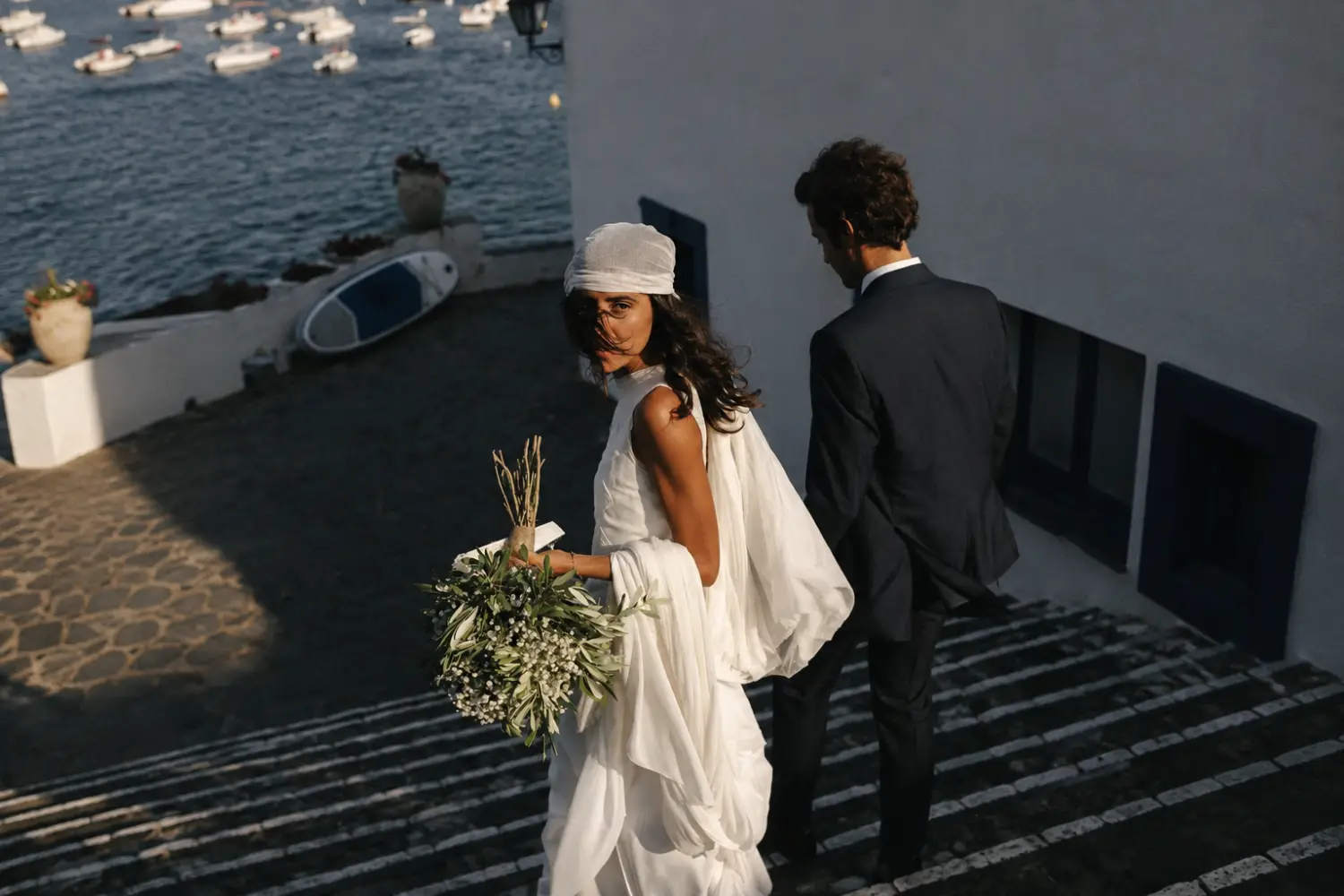
When you decide to gather your inner circle across the Mediterranean, the geographic choice is rarely about distance or flight schedules. It is an aesthetic declaration. Europe’s classic trinity – Italy, France, and Greece – each possesses a distinct rhythm, a unique way of lighting a table, and a specific philosophy of celebration.
Italy is generous, sun-soaked, and unabashedly emotional – a realm where ancient noble estates meet the wild, unscripted warmth of la dolce vita. France is an exercise in haute couture, architectural purity, and epicurean poetry, designed for tastemakers who demand timeless romance framed by 18th-century stone. Greece is ethereal light, wild coastline, and ancient mythology brought into the present – an open-sky canvas for couples who crave effortless, barefoot sophistication beside the sea.
Whether you picture yourself sitting down to a candlelit feast in a Puglian courtyard, sipping champagne on a terrace overlooking Bordeaux, or exchanging vows above an ancient Cretan stream, this guide explores the soul of each destination – pairing your vision with extraordinary venues from the BrideLifestyle.com Destination Weddings directory.
Photo: PINTEREST
Italy: The Art of Unhurried Heritage & Generous Feasts
To marry in Italy is to succumb to a sensory world that feels both ancient and delightfully alive. Italian luxury is never rigid – it is tactile, generous, and inherently soulful. It is found in the smell of wood smoke mixed with jasmine on a warm June night, the texture of hand-thrown terracotta tiles, cypress trees cutting clean lines against a rose-colored sky, and long, wild banquet tables lined with mismatched antiques, fresh citrus, and flickering taper candles.
The Italian wedding philosophy centers on the art of hostmanship. History here is not preserved behind red velvet ropes – it is danced in. Frescoed salons built in the Renaissance host late-night DJ sets, and 300-year-old magnolia trees frame modern, minimalist floral arches. The rhythm of an Italian wedding weekend encourages guests to drop their guard and lose track of time. A typical itinerary flows seamlessly from a casual, wood-fired welcome pizza party in an olive orchard to a black-tie dinner that stretches over four hours, culminating in limoncello toasts beneath string lights and an impromptu late-night swim.
If your wedding dream involves abundant laughter, deep emotional connection, exceptional food that feels cooked from the heart rather than a banquet kitchen, and an ambiance that balances historic grandeur with easy, barefoot elegance, Italy is your home.
Photo: PINTEREST
Featured Italian Sanctuaries
Villa Bossi (Lombardy)
Tucked away in Bodio Lomnago near the calm waters of Lake Varese, Villa Bossi is a masterclass in quiet Italian nobility. Constructed between the 16th and 18th centuries, this historic mansion does not shout its elegance – it whispers it through frescoed halls, coffered ceilings, and centuries-old period antiques.
The estate is anchored by an English-style parkland dominated by a monumental, 300-year-old magnolia tree whose canopy creates a natural cathedral for outdoor vows. Surrounding the residence, a formal Italian garden enclosed by hornbeam hedges offers a striking geometric contrast to the wilder parklands outside.
What elevates Villa Bossi beyond traditional historic venues is its living artistic soul. The villa functions as a world-renowned center for musical research and education, housing a luthier workshop, a recording studio, and a museum of rare ancient instruments. For couples who imagine an atmosphere infused with classical music, architectural heritage, and literary charm, Villa Bossi stands as a singular, soulful haven.
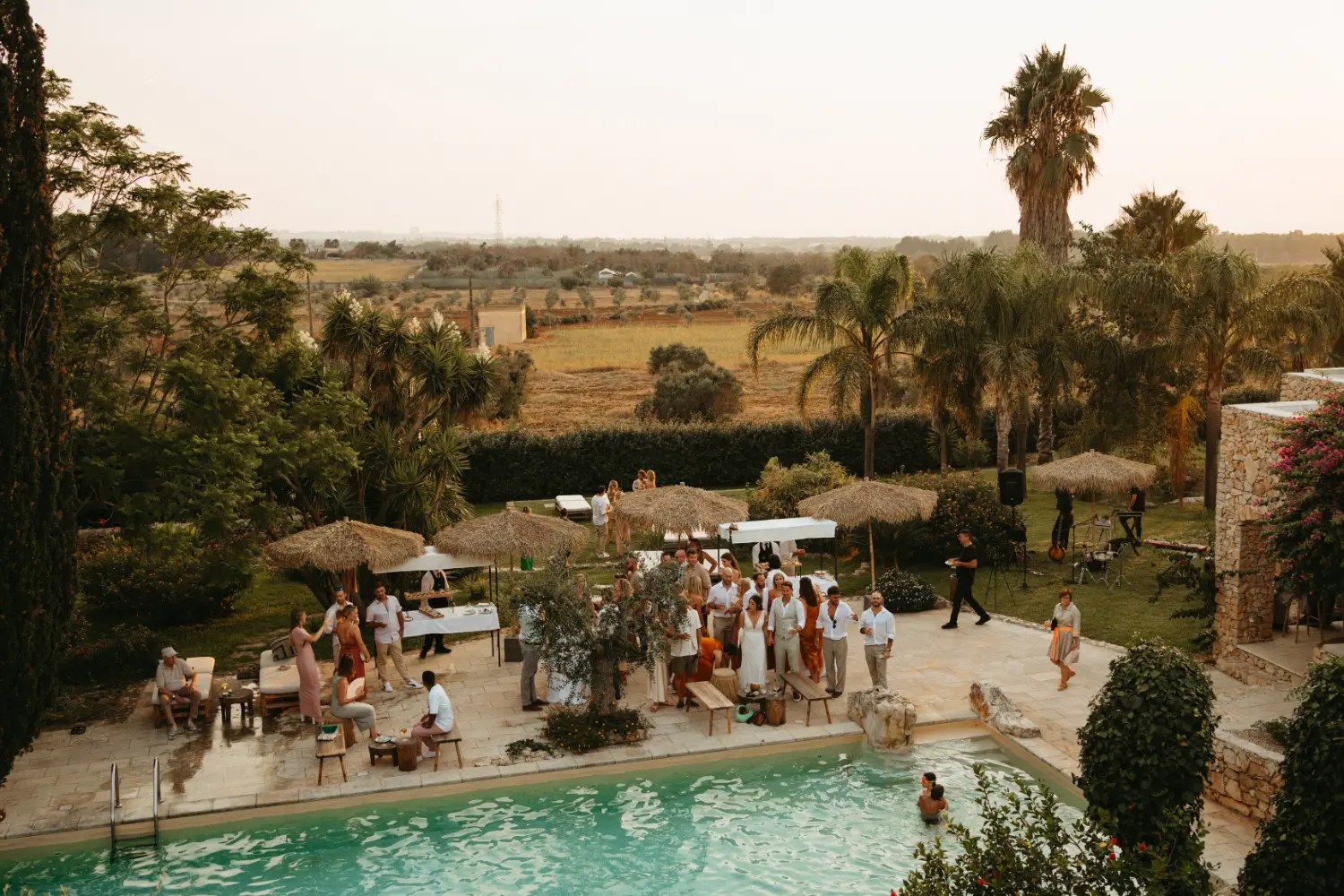
For couples whose aesthetic leans toward sun-bleached minimalism, natural textures, and organic Southern warmth, Tenuta Negroamaro in Salento offers a modern vision of Puglian luxury. Set just minutes from the coastal charms of Gallipoli and the baroque beauty of Lecce, this private countryside estate was conceived explicitly for multi-day gatherings that feel like staying at the private home of an impossibly chic friend.
Constructed from local tuff stone that glows soft gold in the late afternoon sun, Tenuta Negroamaro is enveloped by olive groves, wild Mediterranean gardens, and open agricultural horizons. The architecture honors regional tradition while paring back clutter, allowing the natural stone, wood, and water elements to take center stage.
Here, the wedding day is merely the centerpiece of a longer, unhurried narrative. Guests arrive for welcome drinks under the trees, spend lazy afternoons by the turquoise pool, gather around long communal tables for long dinners prepared with local ingredients, and linger late into the evening under starry skies. It is a sanctuary for those who value privacy, authentic craftsmanship, and understated sophistication.
France: High Romance, Architectural Precision & Culinary Artistry
To plan a wedding in France is to enter a world where beauty is an exact science and romance is an art form refined over centuries. The French destination style appeals to the ultimate aesthete – the couple who believes that every single detail, from the calligraphy on the place cards to the vintage of the champagne, should be executed with quiet, unshakeable perfection.
Where Italian weddings are organic and exuberant, French celebrations lean toward symmetry, understated poise, and epicurean artistry. The classic French landscape is a study in painterly romance: gravel driveways lined with plane trees, limestone châteaux perched above rolling vineyards, light-filled orangeries, and formal parterre gardens that catch the golden hour light just so.
French hospitality is built around the art of the table (l'art de la table). Gastronomy is not an afterthought or a catering contract – it is a central performance of the weekend. Guests expect multi-course dinners paired thoughtfully with estate wines, artisanal cheeses served before dessert, and exquisite pastry work that looks almost too delicate to touch. A French wedding feels like stepping into a private editorial feature – cool, collected, deeply romantic, and endlessly elegant.
Photo: PINTEREST
Featured French Sanctuaries
Château Gassies (Bordeaux)
Perched on a sunlit hillside just fifteen minutes from the center of Bordeaux, Château Gassies balances 18th-century estate grandeur with contemporary luxury. Built in 1775, this privatized sanctuary spans fourteen hectares of manicured parkland overlooking the Garonne River, providing a breathtaking countryside backdrop remarkably close to one of France's most famous wine capitals.
Château Gassies was designed for celebrations that move fluidly from one distinct space to the next, maintaining an element of surprise for guests throughout the day:
The Vows: Say "I do" beneath the wide canopy of ancient oak trees in the parkland or within the structured beauty of the formal gardens.
The Aperitif: Transition to the West Terrace for champagne and canapés while the sun dips behind the Bordeaux skyline across the river.
The Banquet: Move inside the Charles X reception room, where original exposed stone walls, high timber beams, and dramatic crystal chandeliers create an atmosphere of warmth and grandeur for up to 150 guests.
Beyond the main event, Château Gassies operates as a private retreat for up to 43 guests housed across five luxury suites and three private guesthouses. With two heated swimming pools, an on-site spa, a gym, and a private tennis court, your guests are invited to unpack, unwind, and linger long after the final dance.
Pricing & Scale: Packages start from €21,000 for a 2-night weekday stay (includes exclusive estate privatization and daily breakfast for 43 guests). Hosts a maximum of 30 weddings per season.
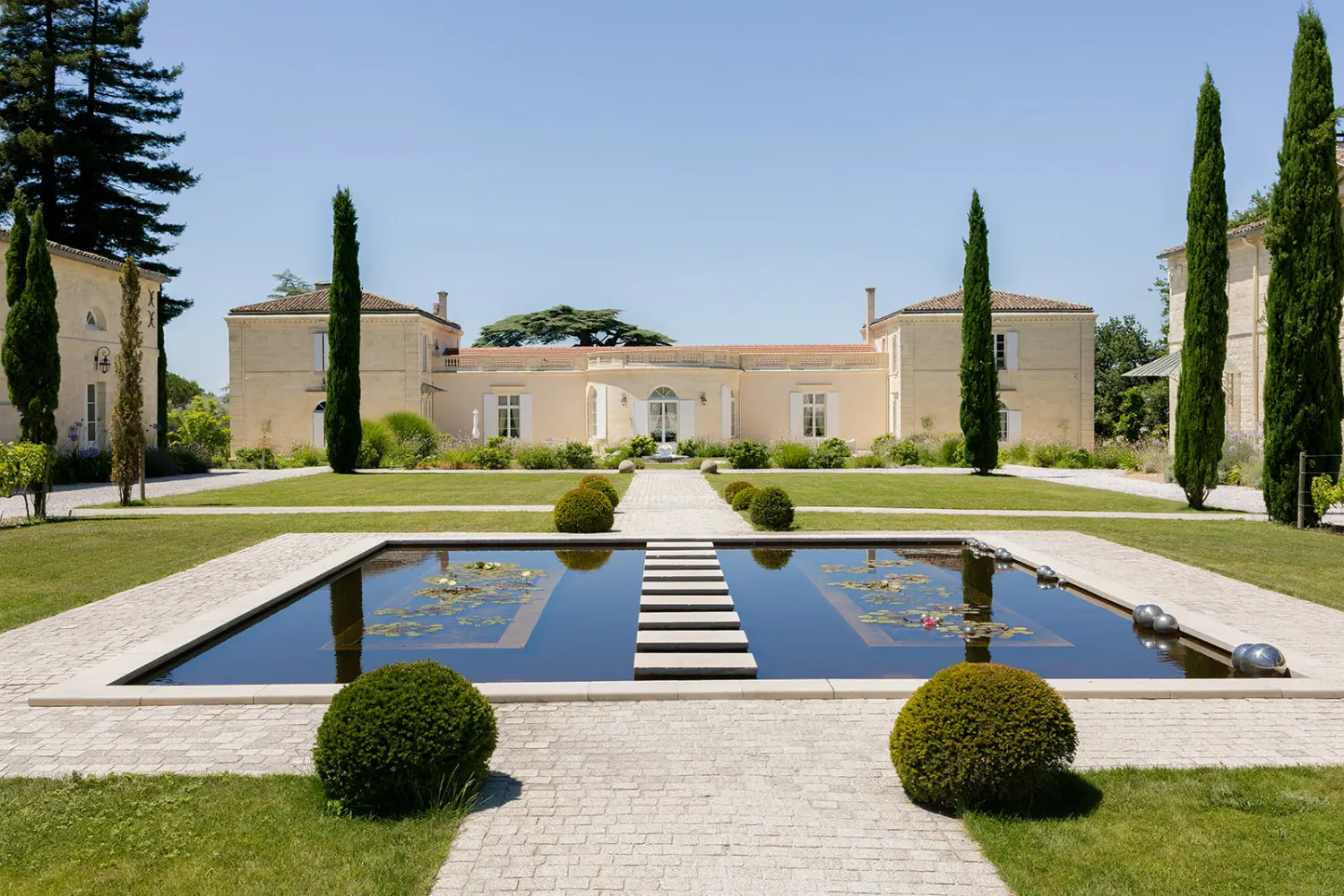
Immersed in six hectares of private vineyards in Moulon – a mere ten kilometers from the medieval streets of Saint-Émilion – Château de Garde is a quintessential wine-country estate designed for immersive three-day wedding weekends.
The estate offers full privatization, allowing couples to curate every square meter of the grounds for their guests. Outdoor ceremonies are hosted on the manicured lawns surrounded by vines, while cocktails are served in the limestone courtyard, which offers unobstructed views across the vineyard estate. For weather transitions or warmer afternoons, the palm-fringed patio centered around a historic fountain offers a shaded, tropical contrast to the classic French architecture.
The primary reception hall – a restored barn with high exposed beams and ambient lighting – welcomes receptions of up to 120 guests. During the day, guests gather around the 18-meter infinity pool that stretches out directly toward the vineyards, sipping local Bordeaux wines and soaking in the quiet solitude of the countryside. With accommodations for up to 50 guests on-site, Château de Garde encapsulates the relaxed, luxurious spirit of a modern French estate.
Scale & Capacity: Receptions for up to 120 guests – on-site lodging for up to 50 guests. Minimum 3-day / 2-night privatization.
Greece: Ethereal Light, Ancient Heritage & Coastal Freedom
To choose Greece for your destination wedding is to step into a landscape defined by dramatic light, deep history, and open horizons. Greece offers a style of luxury that is wilder, more luminous, and deeply connected to nature. It is a land where ancient stone, silvery olive groves, and wild mountain herbs meet the endless blue of the Aegean Sea.
The Greek wedding aesthetic is rooted in elemental beauty and open-air living. It is defined by the play of light on textured whitewashed plaster or ancient Venetian stone, floral design that incorporates wild olive branches and jasmine, and celebrations that take place entirely under the stars.
Greek hospitality (philoxenia) is legendary – it is warm, unpretentious, and deeply welcoming. Whether you are gathering on a historic Cretan estate framed by mountains or hosting a cosmopolitan seaside event along the Athenian Riviera, a Greek wedding carries an undeniable sense of magic. It feels elemental, timeless, and effortlessly chic.
Photo: PINTEREST
Featured Greek Sanctuaries
Roxani Estate (Chania, Crete)
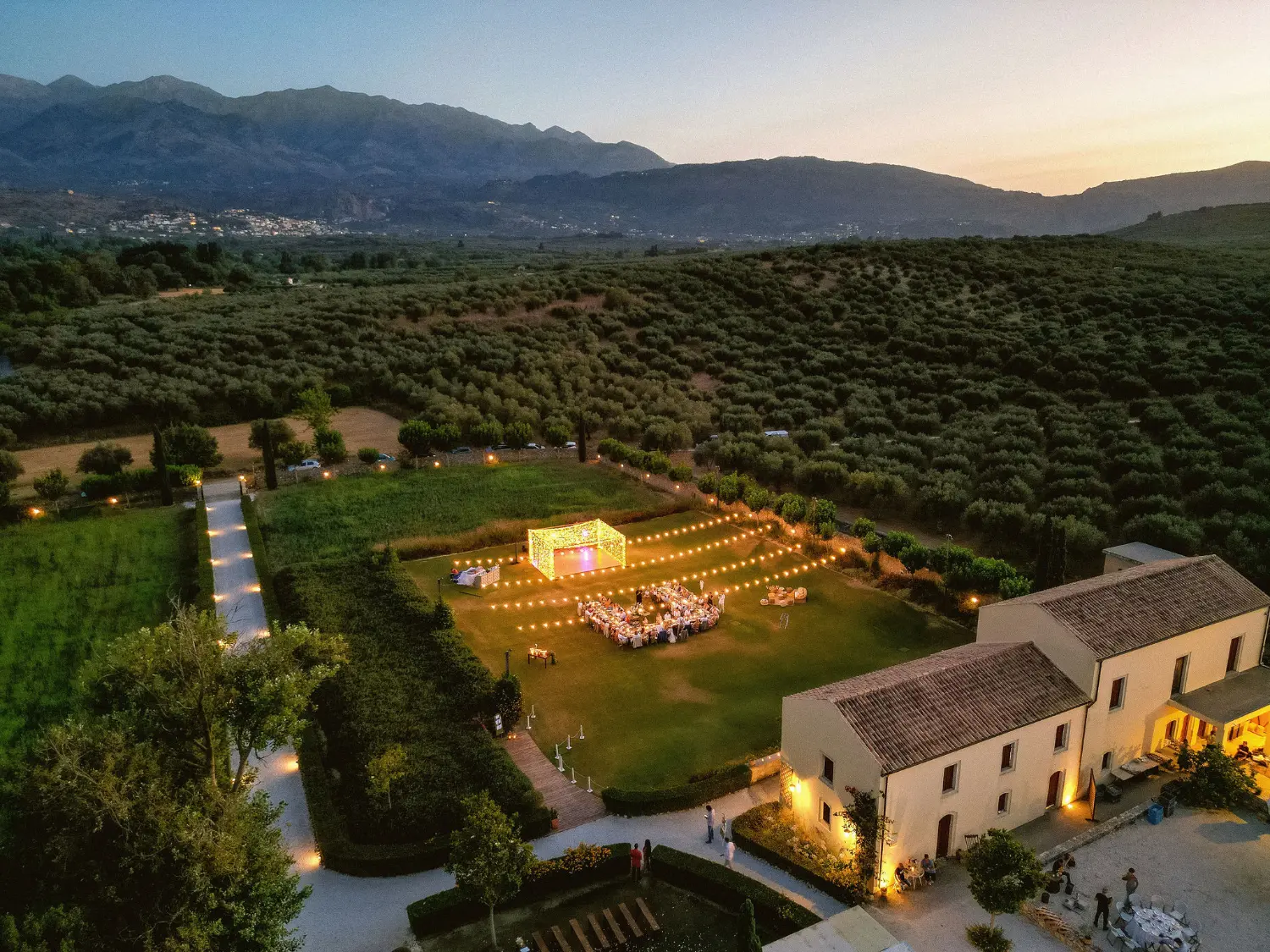
Hidden away in the village of Armenoi Apokoronou near Chania, Roxani Estate (historically known as the Skordiliani Residence) is a rare botanical sanctuary steeped in centuries of Cretan history. Framed by rolling hills covered in olive groves and backed by the dramatic White Mountains, this private estate traces its origins back to the Byzantine era and the Venetian rule of Crete.
The estate’s historical crown jewel is its sacred chapel, I Gennisi tis Panagias, built during the Venetian period between 1205 and 1669. Restored to preserve its distinct Venetian architectural details, the chapel stands within a lush landscape where a Venetian stream runs under century-old poplar trees, surrounded by gardens filled with jasmine, lantana, and rosemary.
Roxani Estate provides a full suite of bespoke services, including full wedding planning, creative direction, styling, and custom lighting design. To preserve the natural ecology and historic character of the landscape, the estate hosts only a limited number of weddings each season – making it an exceptional choice for couples seeking an intimate, wild, and historic Cretan celebration.
The Vows: Exchange vows before the historic chapel or under the canopy of poplar trees beside the stream, followed by an open-air banquet under the Cretan stars.
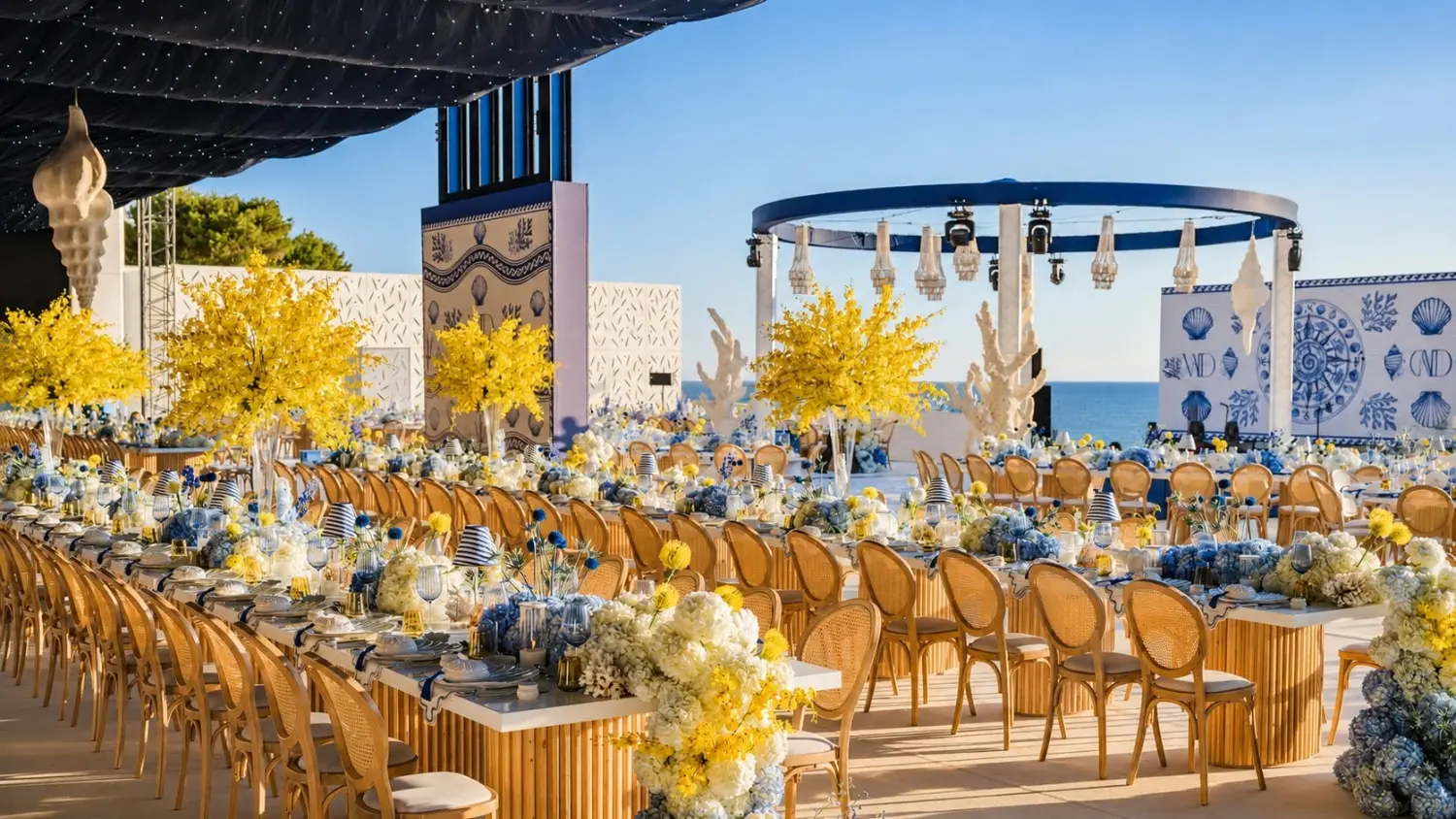
For couples envisioning a high-glamour, 5-star coastal event, Grand Resort Lagonissi offers a breathtaking setting along the prestigious Athenian Riviera. Set on a private, 72-acre peninsula south of Athens, this world-class resort combines easy access to the capital with the seclusion of a private island escape.
Grand Resort Lagonissi excels at hosting events across every scale, from intimate beachfront ceremonies for a close circle of loved ones to grand galas for up to 1,200 guests. Couples can say "I do" directly on the golden sand with the Aegean Sea stretching out behind them, before transitioning to private seaside terraces or open-air dining decks for dinner and dancing.
With its collection of private seafront villas featuring individual pools and private docks, 5-star spa facilities, and world-class dining options, the resort allows couples and their guests to enjoy a luxurious, cosmopolitan Mediterranean retreat without ever leaving the peninsula.
Style & Scale: 5-star peninsula resort, private beachfront vows, events from intimate gatherings to galas for 1,200 guests.
The Experience: High-end resort living with private seaside villas, waterside dining, and dramatic Aegean sunset views.
Each of these three classic destinations offers a distinct canvas for a luxury wedding weekend. To determine which destination aligns with your vision, consider how you want the weekend to feel for both you and your guests.
The Italian Spirit
Italy is unmatched if your priority is a warm, unhurried house party centered around regional gastronomy, rustic noble architecture, and soulful, continuous hospitality. The atmosphere is inherently visceral and visceral, ideal for multi-day gatherings that transition naturally from informal olive grove pizza parties to four-hour candlelit banquets.
Photo: PINTEREST
The French Touch
France is the natural home for those whose hearts lie in classical romance, 18th-century châteaux, refined table styling, and Michelin-caliber dining paired with world-class wines. The aesthetic is curated, symmetrical, and poetic, turning every moment into a private editorial portrait framed by limestone and vineyards.
Photo: PINTEREST
The Greek Haven
Greece beckons if you are drawn to wild natural beauty, open-sky celebrations beneath the stars, ancient Venetian or Byzantine history, and luminous coastal horizons. It offers an elemental style of luxury that balances the barefoot freedom of the Mediterranean with rich historical narrative and world-class seaside hospitality.
Discover our curated selection of vetted European venues, planners, and editorial inspiration on the BrideLifestyle.com Destination Weddings portal to begin shaping your destination story.
Photo: PINTEREST
Editorial Guide & Curated Muse
Editorial Philosophy
This guide is produced for international couples who approach their wedding weekend as a curated design experience. Every venue featured in our guide represents the pinnacle of European destination hospitality and maintains a profile within the BrideLifestyle.com Destination Weddings directory.
How far in advance should we reserve a luxury destination venue in Europe?
Boutique estates, historic châteaux, and private sanctuaries intentionally limit the number of weddings they accept each year to protect their grounds and ensure absolute exclusivity for every couple. For prime summer weekend dates (June through September), we recommend securing your chosen venue 12 to 18 months in advance.
What is the typical flow for a multi-day European wedding weekend?
Most high-end destination celebrations are structured across three distinct days:
Day 1 (The Welcome): An informal, low-pressure gathering such as a wood-fired pizza night in an olive grove, a wine-tasting cocktail hour on a terrace, or beachside sunset drinks.
Day 2 (The Wedding): A late afternoon ceremony to avoid the mid-day heat, followed by golden-hour aperitifs, a long sit-down banquet, and late-night dancing.
Day 3 (The Recovery): A slow, late-morning brunch or poolside lounge session with fresh juices, pastries, and casual dining before guests depart.
Do European venues provide in-house wedding planning services?
Saddled with distinct operational models, some boutique properties provide full in-house planning, styling, and decor design packages tailored to the estate. Others operate on an exclusive-hire basis – providing estate management while connecting couples with a trusted network of high-end local caterers, florists, and production managers.
How do we handle accommodation for guests at a private estate?
Many private châteaux and estates offer on-site lodging for your core VIPs or wedding party – for example, Château Gassies accommodates 43 guests and Château de Garde accommodates up to 50 guests on-site. For remaining guests, your wedding planner or venue coordinator will typically organize room blocks or boutique hotel recommendations nearby, complete with private shuttle transfers on the wedding day.
Where can we find more venue recommendations and connect with planners?
Discover our full selection of handpicked venues, luxury planners, photographers, and editorial guides on the BrideLifestyle.com Destination Weddingsplatform.
This website uses cookies to improve the user experience and optimize its performance. By continuing to use this website, you agree to the use of cookies on this website.
Read more

 share
share



.webp)
.webp)
.webp)
.webp)
.webp)
.webp)
.webp)
.webp)


